
Happyend (2024-10-04)
Drama |
Overview
Directed By: Neo Sora
Star Cast: Hayato Kurihara , Yukito Hidaka , Yuta Hayashi , Shina Peng ,
Videos Playlist
Similar Collection




Images













































-
CinemaSerf
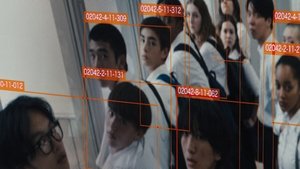
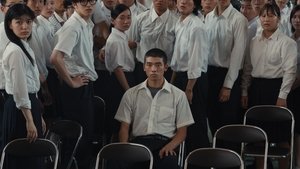
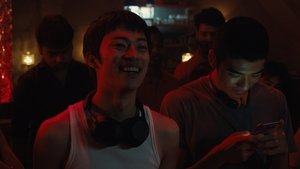
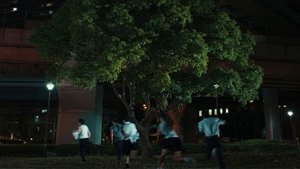
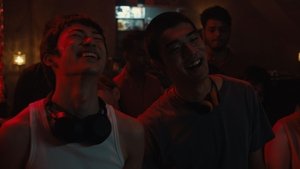
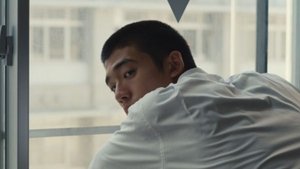
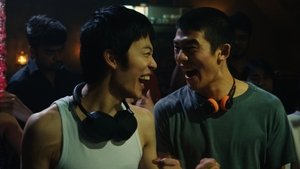
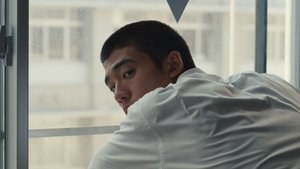
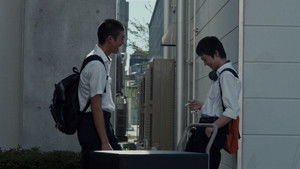
There’s something quite Orwellian about this futuristic drama set in a Japan living under the threat of a once-in-a-century earthquake that could devastate the place. First to capitalise on this paranoia is the Prime Minister who passes a series of decrees that limit the movement and freedoms of most of the population. This proves especially troublesome for a group of high school students who, after pulling a prank on the principal, find themselves very much in his firing line. Initially their mischief, and their love of music, keeps the group together but when “Yuta” (Hayato Kurihara) and best pal “Kou” (Yukito Hidaka) start to drift apart, the dynamic of the group starts to change. “Yuta” is associating more with the focussed “Fumi” (Kilala Inori) and other students determined to rebel against the increasingly authoritarian regime whilst his pals are enjoying what’s left of their final year. Things come to an head when some of the students stage a sit-in in the principal’s office and the original group of happy-go-lucky mischief makers realise that adulthood is beckoning and there is no going back. The film itself is really nothing much to write home about, but what it attempts to deal with is more interesting: the State relying on a combination of fear and apathy by the general public; professionals who have to play the political game to keep their jobs and improve their school and the gradual realisation amongst hitherto joined-at-the-hip teenagers that they may have to go their separate ways. That’s proving quite a wrench for not just the two boys here, but for some of the others whose hormones are rather uncertainly making their presence felt. The acting and writing is all adequate, nothing really more, but there are some fun scenes to compensate - usually from the kilt-clad “Ata-Chan” (Yûta Hayashi) and some of the expressions on the face of their head teacher (Shirô Sano) raise a smile too. Logistically, I’m not at all sure just how they could ever have carried out their mischief in the first place, but this isn’t really a film that stands too much scrutiny. It’s more of an introductory guide to life when things start to become a little more grown up.
-
Brent Marchant
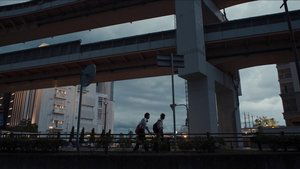
Maturing into adulthood can be difficult enough in itself without the impact of extraneous deleterious circumstances. But, when such conditions are added to the mix, it can make the process mind-boggling for those who lack the wisdom, experience and insights to know how to cope with them on top of everything else they’re already going through. That’s the essential premise underlying the narrative in this latest offering from writer-director Neo Sora. The film presents a coming of age tale set in a version of Tokyo of the near future in which the imminent threat of a mega-earthquake has the population constantly on edge. This scenario is made increasingly volatile by an authoritarian conservative government imposing invasive surveillance and policing measures said be in the interest of public safety but that, coincidentally, are principally targeted at the city’s youth, minorities and protesting activists. The story is told from the perspective of five outspoken, rambunctious high school students approaching graduation (Hayato Kurihara, Yukito Hidaka, Yȗta Hiyashi, Shina Peng, Arazi) as they attempt to make sense of their ever-changing lives, as well as the chaotic environment in which they’re currently living, one that’s precariously on the precipice of sliding into a dystopian future, despite whatever precautions officials are implementing. From this description, it would seem that this foundation should provide the basis for an intriguing picture. However, this intriguing setup aside, “Happyend” frequently comes across as meandering and unfocused. Perhaps the intent behind this approach is to create a storyline innately reflective of the characters’ confused mindsets and baffled outlooks, but it only works for a while before eventually turning tedious and directionless. As a consequence, that leaves viewers wondering what they’re supposed to make of all this. In the film’s defense, this release could be seen as a cautionary tale in light of recent events in our own world, especially where matters of compliance, fear mongering and intolerance toward certain designated segments of society are concerned, an attribute in its favor that should provide us all with ample food for thought. But is that enough to make this project work? I’d contend not, despite whatever sincere intentions may have been in the filmmaker’s mind. We’d be wise to pay attention to the urgency behind the message here, though it likely would have had greater impact if the production had been more sharply focused, especially since the time available to take meaningful steps to prevent the kinds of looming catastrophes depicted here could be running out more quickly than we’d like to believe.